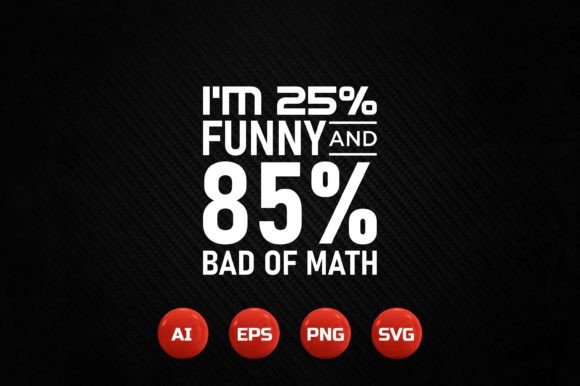
Math T-shirt Design 15: A Designer's Review
As a designer who has spent years navigating the gap between digital vectors and physical thread, I approach every new asset with a critical eye. When I first opened the files for Math T-shirt Design 15, my immediate goal was to determine if this graphic could survive the transition from screen to stitch. The concept is straightforward and relatable: "I'm 25 Funny And 85 Bad Of Math." It taps into that universal struggle with numbers while celebrating a milestone birthday. However, in the world of machine embroidery, humor is only half the battle; the other half is execution.
First Impressions and Visual Personality
The layout of Math T-shirt Design 15 feels balanced, which is crucial for any design intended for custom apparel. The typography appears bold enough to hold its own against fabric texture, yet the playful nature of the message suggests it shouldn't be overly rigid. In my experience, designs that try too hard to look technical often fail on soft goods. This piece strikes a nice middle ground. It has the visual weight needed for a sweatshirt embroidery project but retains the lighthearted charm required for a personalized gift.
When I visualize this as a finished product, I see it working exceptionally well on a heavyweight tote bag or a cozy fleece hoodie. The contrast between the "25" and "85" creates a natural focal point. For an Etsy seller or small shop owner, this kind of clear hierarchy helps customers instantly understand the joke, even from a distance at a craft fair. The vector shapes are described as fully resizable, which gives me confidence that I can adapt the scale without losing the integrity of the lines.
Translating Graphics to Stitchery
While the product description lists AI, EPS, PNG, and SVG formats, it is vital to remember that these are primarily print-ready graphics. To use Math T-shirt Design 15 as a true machine embroidery design, you must digitize it properly. You cannot simply load an SVG into an embroidery machine and expect magic. The process requires converting those clean vector paths into specific stitch types like satin stitch for the lettering borders and fill stitch for the solid areas.
If you are planning to use this for a holiday embroidery collection, consider how the stitch density will affect the final look. Dense areas might pucker thin fabrics, so adjusting the underlay and pull compensation is essential. I always recommend creating a test run on scrap fabric first. This allows you to check if the thread colors pop against your chosen background and ensures the running stitch details don't get lost. For a baby embroidery project, you would want to soften the edges, perhaps using a slightly thicker thread to give it a more tactile, friendly feel.
Real-World Application Scenarios
Imagine preparing a batch of merchandise for a boutique. You have a client who wants aprons for a math teacher's retirement party. Math T-shirt Design 15 fits perfectly here. Embroidering this onto a canvas apron adds a layer of professionalism and durability that screen printing cannot match. The texture of the stitches adds value to the handmade product, making it feel more premium.
Alternatively, consider an embroidered patch application. If you create patches using this design, they become versatile assets for caps, denim jackets, or backpacks. The "bad at math" sentiment is a great conversation starter, increasing buyer engagement. However, when moving to curved surfaces like caps, you need to be careful with the width of the design. Hoop size becomes a limiting factor here. If the text wraps too tightly around the curve, the letters may distort. Always mock up the design on a printable mockup of the specific cap style before committing to production.
Navigating Potential Pitfalls
Not every fabric is created equal, and Math T-shirt Design 15 requires some caution depending on the substrate. On textured fabrics like heavy wool or thick terry cloth, small details in the numbers might get swallowed by the weave. In these cases, simplifying the digitization or increasing the overall size is necessary. Similarly, on stretchy fabrics like jersey knit, the tension of the stitches can cause the design to ripple over time. Using the proper stabilizer is non-negotiable to maintain the shape of the letters after frequent washing.
Dark fabrics present another challenge. While the file description mentions easy color changes, stitching white or light-colored thread on black fabric requires precision. If the fill stitch isn't dense enough, the dark background will show through, ruining the legibility of the joke. Conversely, on light fabrics, ensure your thread colors provide enough contrast. A grey thread on a beige shirt might look muddy and unprofessional, lowering the perceived quality of your commercial embroidery work.
Practical Notes for the Digital Creator
For those selling this as a digital product or using it for their own brand consistency, there are a few key steps to take. First, confirm the licensing terms. Just because you have the file does not mean you have the right to sell the finished embroidered items commercially. Always verify if the license covers commercial use for handmade products. Second, review the design in black and white mockups. Sometimes, color distracts from poor spacing or alignment issues that are glaringly obvious in grayscale.
Finally, think about the customer experience. When a buyer receives a sweatshirt with Math T-shirt Design 15 embroidered on it, they expect a clean, crisp finish. Loose threads or uneven stitching can destroy customer trust. Take the time to trim excess threads and press the finished product carefully. Whether you are a hobbyist making gifts or a professional decorator fulfilling large orders, the attention to detail separates a good design from a great one.
In conclusion, Math T-shirt Design 15 offers a fun, versatile concept that works well across various applications, from personalized gifts to small business merchandise. Its success lies in how well you adapt the digital graphic to the physical realities of thread and fabric. By testing your digitization, choosing the right stabilizers, and respecting the limitations of different materials, you can turn this simple graphic into a high-quality, marketable piece of art. It is a solid addition to any portfolio of T-Shirt Designs, provided you treat the embroidery process with the care it deserves.