Hardcore Homebody: A Designer's Embroidery Review
As a designer who has spent years turning digital concepts into tangible stitched goods, I approach every new machine embroidery design with a specific set of questions. Does the line weight hold up when converted to satin or fill stitch? Is the visual hierarchy clear on a small scale? Most importantly, does the design actually solve a problem for my customers or just add clutter? When I first opened the files for Hardcore Homebody, I was looking for a versatile asset that could anchor a seasonal collection for my craft business. This review breaks down how this specific Graphics file performs in real-world scenarios, moving beyond the screen to the stitching table.
First Impressions: Mood and Visual Personality
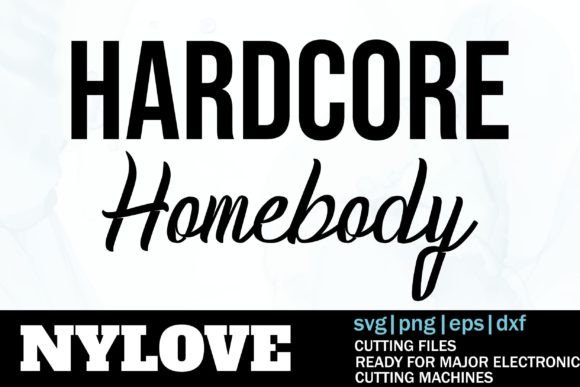
The moment you view the Hardcore Homebody Svg in your vector software, the attitude is immediately apparent. It is not a subtle design; it leans heavily into the "sassy" and "introvert" aesthetic that has become so popular among Etsy sellers and boutique owners. The typography is bold, and the layout suggests a strong statement piece rather than a delicate accent. For those of us creating custom apparel, this kind of visual personality is crucial. It tells the customer exactly what they are buying before they even see the finished product.
However, the transition from a crisp SVG to a physical embroidery file requires careful thought. The design relies on clean lines and distinct shapes. In a Print Templates context, this works beautifully for digital mockups. But when planning a stitch density conversion, I found myself analyzing the negative space. If the lettering is too tight, the machine might struggle with underlay, leading to puckering on softer fabrics. The mood is confident and relatable, perfect for the "stay at home mom" demographic or anyone embracing their introverted side, but that confidence needs to be supported by technical precision during the digitizing process.
Real-World Application: From Totes to Sweatshirts
To truly test the value of Hardcore Homebody, I imagined a specific project: a limited run of heavyweight cotton tote bags for a local maker fair. These bags need to withstand daily use, frequent washing, and the rough handling of grocery shopping. Placing this design on a canvas tote bag offers a flat, stable surface which is ideal for maintaining the integrity of the text. Using a medium-weight stabilizer would ensure the stitches sit flat without sinking into the weave.
I also considered using this as a sweatshirt embroidery element. On a fleece hoodie, the texture of the fabric can sometimes swallow finer details. With Hardcore Homebody, the bold nature of the text helps it pop against the fuzzy background. Imagine a customer wearing this on a coffee run; the design serves as an instant conversation starter. It transforms a basic garment into a personalized statement. For a small shop product, this kind of recognition is vital. It moves the item from being a generic sweatshirt to a branded lifestyle piece that resonates with the wearer's identity.
Beyond apparel, I evaluated its potential as an embroidered patch. Patches require high contrast and simplified edges. While the original SVG is detailed, simplifying the inner curves slightly for a patch version would likely yield excellent results. This versatility makes it a strong candidate for a craft business that wants to offer multiple product variations—totes, patches, and shirts—all derived from a single core asset.
Navigating Technical Challenges and Fabric Constraints
While the design is robust, there are specific situations where caution is required. If you are working with thin or stretchy fabrics like jersey knit t-shirts, the hoop size becomes critical. Stretching the fabric too much while hooping can distort the bold letters of Hardcore Homebody, making them look wavy once the hoop is removed. Always use a tear-away or cut-away stabilizer appropriate for the fabric weight to prevent distortion.
Another area of concern is dark fabric. The default color palette in the preview might assume a light background. When stitching on black or navy garments, the thread colors must be chosen carefully to maintain readability. A white or bright yellow fill stitch would work well, but you must ensure the running stitch outline is dense enough to prevent the dark fabric from showing through. Additionally, if you attempt to place this design on curved surfaces like caps, the tension changes significantly. The straight lines of the text may bow if the cap panel is not properly stabilized. I recommend testing the design on a scrap piece of the actual cap material first to gauge how the curve affects the final look.
Detailed corners and tiny lettering within the design also warrant attention. If you plan to scale the design down for a baby item or a small pillow cover, check the minimum stitch width. Too much reduction can cause thread breakage or a muddy appearance where the fill stitch cannot resolve the sharp angles. It is always better to keep the design large enough to allow the needle to move freely without jamming.
Practical Notes for the Professional Maker
Before committing to a full production run of Hardcore Homebody items, follow these practical steps to ensure quality:
- Test on Scrap Fabric: Never skip the test stitch. Run the design on a scrap of the exact fabric you intend to use to check for puckering and alignment.
- Verify File Formats: The ZIP FILE CONTAINS 1 SVG, 1 PNG, and 1 D file. Ensure your embroidery machine software can read the provided format directly or convert it without losing data.
- Check Licensing: Confirm whether the license allows for selling finished goods. As a commercial embroidery asset, understanding the terms regarding resale is essential for protecting your business.
- Review Stitch Density: If you are converting the SVG yourself, adjust the density settings based on the fabric thickness. Dense areas on thick wool will behave differently than on thin linen.
- Mockup Variations: Create printable mockups in both light and dark backgrounds to show customers how the design adapts to different products.
Final Verdict: A Strong Asset for Personalized Gifts
In conclusion, Hardcore Homebody is a solid addition to any designer's library, particularly for those targeting the home decor and casual wear markets. Its bold aesthetic translates well into a finished product that feels premium and intentional. Whether you are creating a personalized gift for a friend who loves staying in or building a holiday embroidery collection for your online store, this design offers a clear visual hook.
It succeeds because it captures a specific cultural moment—the celebration of being a homebody—and presents it in a way that is ready for production. However, its success ultimately depends on the maker's ability to adapt it to the right materials and techniques. By respecting the limitations of the fabric and the mechanics of the machine, you can turn this digital file into a high-quality, professional-grade item that customers will love to wear and display. For the savvy creative entrepreneur, this is more than just a graphic; it is a tool for building brand consistency and engaging a loyal customer base.