Review: My Favorite People Call Me Dad Funny Tee Design
As a designer who has spent countless hours digitizing and reviewing embroidery assets, I approach every new file with a mix of curiosity and skepticism. We have all been there: you download a promising machine embroidery design, only to find the stitch paths are chaotic or the details are too fine for practical use. Today, I am looking closely at My Favorite People Call Me Dad Funny Tee. This is not just another generic graphic; it is a piece of digital art intended for high-quality output, and I want to determine if it holds up under the needle.
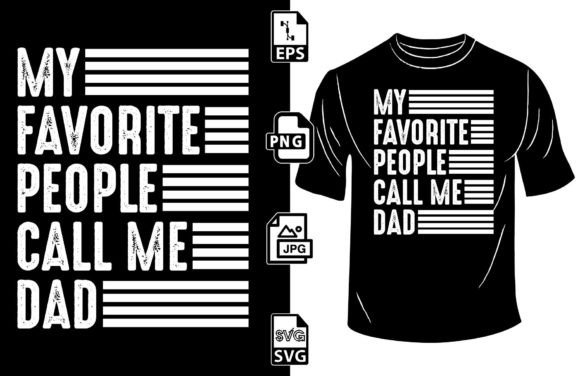
The first impression of this design is its bold, playful personality. The typography suggests a casual, humorous tone that resonates immediately with the target audience: fathers who take pride in their role but do not take themselves too seriously. When evaluating a design like this for real-world application, I look beyond the screen. I imagine how the curves of the letters will translate into thread. Will the satin stitches lay flat? Will the fill stitches cause puckering? These are the questions that separate a pretty picture from a viable embroidery project.
Visual Appeal and Stitching Clarity
The layout of My Favorite People Call Me Dad Funny Tee is balanced, which is crucial for embroidery. Unlike complex illustrations that require thousands of stitches and dense underlay, this design relies on strong typographic elements. This simplicity is actually its strength. In embroidery, less is often more. A clean design ensures that the text remains legible even after washing and wearing. The visual personality here is friendly and approachable, making it an ideal candidate for personalized gifts and custom apparel.
When I visualize this on a garment, I see clear potential for high stitching clarity. The shapes are distinct, meaning there is less risk of thread breaks or bird nests compared to intricate lace-like patterns. For an Etsy seller or small shop owner, this reliability is gold. You want a product that looks professional straight off the machine, minimizing the need for tedious trimming and cleanup. This design feels like it would produce a crisp, clean finished product that enhances brand consistency for handmade businesses.
Real-World Application Scenarios
Let us move from theory to practice. Where does this design truly shine? I recently considered a scenario involving a custom order for a Father’s Day bundle. The client wanted matching items for a dad and his kids. While the title suggests a tee, the versatility of this graphic extends far beyond cotton shirts. Imagine this stitched onto a heavy-weight canvas tote bag design. The contrast of colorful thread against natural canvas creates a rustic, artisanal look that sells well at craft fairs.
Another excellent application is sweatshirt embroidery. The soft texture of fleece provides a stable base for the stitches, allowing the design to pop without sinking into the fabric. It would also work beautifully as an embroidered patch applied to a denim jacket or a baseball cap. For those running a craft business, offering this as part of a holiday embroidery collection could significantly boost buyer engagement. It is not just a design; it is a conversation starter.
However, we must be realistic about limitations. If you are planning to use this on baby embroidery items, such as onesies, proceed with caution. Babies have sensitive skin, and the back of the embroidery must be soft. Ensure you use a high-quality cut-away stabilizer and consider covering the back with a soft fusible interfacing if the stitch density feels rough to the touch. Always test on scrap fabric first to gauge the hand feel of the final item.
Navigating Fabric and Hoop Constraints
One of the most critical aspects of using any digital embroidery file is understanding how it interacts with different materials. This design, being primarily text-based, requires careful attention to hoop size. If you are working with a small 4x4 inch hoop, you may need to resize the design. Be wary of scaling it down too much. Tiny lettering can become illegible if the stitches merge together. Conversely, scaling it up too large on a stretchy fabric like jersey knit can lead to distortion.
Fabric texture plays a massive role here. On smooth cotton or polyester blends, the design will look sharp. On textured fabrics like terry cloth or waffle knit, the smaller details might get lost. I recommend using a topping stabilizer for these surfaces to keep the stitches sitting on top of the pile. For dark fabrics, ensure your thread colors have enough contrast. A light gray thread on a navy shirt might look sophisticated on screen but disappear in person. Test your thread colors in natural light before committing to the final piece.
Technical Considerations for Designers
Before you load this into your machine, there are several practical steps to take. First, verify the file formats included. The description mentions PNG, EPS, JPG, and SVG files. Note that SVG and EPS are vector graphics, which are excellent for printing or cutting machines, but they are not native embroidery files. You will likely need to digitize these vectors into a stitch file compatible with your specific machine, or check if a pre-digitized version is available. If you are digitizing it yourself, pay close attention to the stitch density. Too dense, and the fabric will pucker; too sparse, and the backing will show through.
For those using this as part of their design assets for print templates, the high-resolution PNGs are valuable for creating mockups. A good printable mockup can help customers visualize the final product, increasing conversion rates for online stores. However, always confirm licensing terms. Just because a file is included does not mean it is free for commercial resale as a digital product. Most licenses allow you to sell the physical handmade product, but restrict the redistribution of the digital file itself.
Final Verdict for Craft Entrepreneurs
In the world of commercial embroidery, reliability and appeal are paramount. My Favorite People Call Me Dad Funny Tee offers a strong balance of both. It is a design that invites warmth and humor, making it perfect for gift-giving occasions. Whether you are creating a unique personalized gift for a client or stocking your small shop with best-selling items, this graphic has the potential to perform well.
Remember, the success of any embroidery project lies in the execution. Take the time to hooping correctly, choose the right stabilizer, and select high-quality threads. When treated with care, this design can elevate a simple garment into a cherished keepsake. For small business owners and hobbyists alike, it represents a solid addition to your library of versatile, market-ready graphics. Always prioritize quality control, and let the craftsmanship speak for itself.