Funny Mechanic Hourly Rate: A Designer's Review
As a designer who has spent years navigating the intersection of digital files and physical thread, I approach every new machine embroidery design with a critical eye. It is not enough for a graphic to look good on a screen; it must translate seamlessly into a tangible finished product. Today, I am evaluating the Funny Mechanic Hourly Rate design. This piece falls squarely into the category of humorous T-Shirt Designs, but its potential extends far beyond simple apparel. When you download this embroidery file, you are receiving a zip compressed folder containing an SVG, PNG, DXF, AI, and EPS file. While these formats offer versatility for cutting machines and print-ready workflows, my focus here is strictly on how this graphic performs when stitched.
The Visual Impact and Design Personality
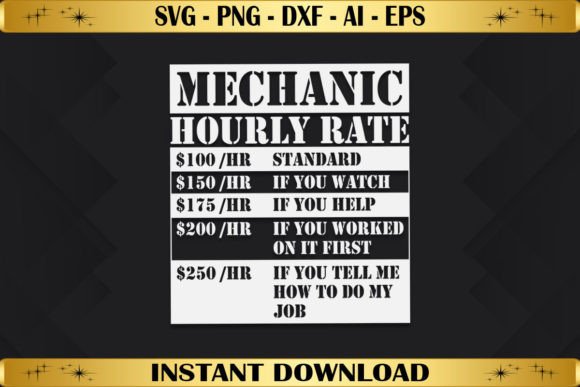
At first glance, the Funny Mechanic Hourly Rate design strikes a balance between bold typography and playful iconography. The mood is lighthearted and self-deprecating, a sentiment that resonates deeply within the automotive repair community and among DIY enthusiasts. From a layout perspective, the composition is straightforward, which is often a strength in commercial embroidery. Complex designs can get lost in the translation from vector to stitch, but this Graphics asset appears to rely on clean lines and distinct shapes. This simplicity suggests it will hold up well even when scaled down slightly, provided the lettering remains legible.
The visual personality of this design screams "gift." It is the kind of statement piece that a customer would immediately recognize as a personalized gesture. Whether you are preparing a custom order for a friend who works in a garage or stocking your Etsy seller shop with seasonal humor, the theme is evergreen. However, the success of the project hinges on execution. A funny message loses its charm if the stitching looks messy or if the thread colors clash with the fabric.
Real-World Application: The Custom Tote Bag Scenario
To truly understand the utility of Funny Mechanic Hourly Rate, let us walk through a real-life scenario. Imagine you are a small business owner preparing a batch of heavy-duty canvas tote bags for a local craft fair. You want to create a standout item that appeals to mechanics and car lovers. You decide to use this design on the front pocket of the bag.
In this context, the sturdy texture of the canvas provides an excellent foundation for the stitch density. Because the design features text, the clarity of the fill stitch will be paramount. If the density is too high, the thick canvas might pucker, distorting the text. If it is too low, the letters may look sparse and unprofessional. My advice is to test the design on a scrap piece of the exact same canvas first. Check how the running stitch outlines hold up against the weave of the fabric. For a tote bag, you want the design to pop without adding excessive stiffness to the material.
Furthermore, consider the placement. On a tote bag, the design needs to be centered and balanced. If the hoop size required for this design is large, ensure your machine can accommodate the full width without re-hooping, which can lead to registration errors. If you do need to re-hoop, mark your alignment points carefully. The result should be a durable, washable accessory that customers will be proud to carry around town.
Navigating Fabric Challenges and Limitations
While the Funny Mechanic Hourly Rate design is versatile, there are specific situations where caution is required. Not all fabrics are created equal, and the wrong choice can ruin an otherwise great concept.
- Stretchy Fabrics: If you plan to use this on a knit sweatshirt or a jersey t-shirt, the stretch of the fabric can distort the text during the stitching process. You must use a tear-away or cut-away stabilizer appropriate for knits to lock the threads in place. Without proper stabilization, the letters may warp, making the hourly rate look uneven.
- Dark Backgrounds: This design likely relies on contrast. If you are embroidering on a black or navy garment, you cannot simply stitch the design directly onto the fabric. You will need to incorporate an underlay or a white applique design backing to make the text readable. Failing to account for this will result in a muddy, invisible message.
- Curved Surfaces: Attempting to stitch this design on a baseball cap requires a specialized cap hoop. The curvature can cause the thread to bunch up, especially in the corners of the letters. If you are producing caps, test the thread colors and tension on a dummy cap first to ensure the stitches lay flat.
- Detailed Corners: While the design is relatively simple, any sharp angles in the typography require precise needle movement. On textured fabrics like denim or wool, tiny details can get lost. If the design includes very fine elements, consider simplifying them or increasing the overall scale to maintain clarity.
Maximizing Product Value and Customer Trust
For the handmade product creator, the quality of the embroidery directly influences perceived value. A well-executed Funny Mechanic Hourly Rate patch or sweatshirt embroidery signals professionalism. Customers buying personalized gifts expect precision. They want to see crisp edges, consistent tension, and vibrant thread colors.
When selling these items, presentation is key. Use printable mockups to showcase the design on various products before you commit to production. Show the design on a dark hoodie, a light apron, and a pillow cover. This helps potential buyers visualize the final outcome. Additionally, clear photography of your actual work builds trust. Show close-ups of the back of the stitching to demonstrate that you have used the right stabilizer and that there is no fraying.
This design also offers excellent potential for holiday embroidery projects. Think about Christmas stockings, holiday-themed aprons for the home mechanic, or gift tags. The humor translates well across different product types, making it a valuable asset for your craft business inventory. By diversifying how you present the design—on a baby embroidery onesie for a future mechanic or a kitchen towel for the family cook—you expand your market reach without needing new design assets.
Practical Notes for the Professional Designer
Before you finalize your order or list your products, take a moment to review the technical aspects of the digital embroidery file. Even though the package includes multiple formats like SVG and AI, remember that these are primarily for cutting or printing. If you are using an embroidery machine, ensure you have converted the vector data into a compatible stitch format (such as .PES, .DST, or .JEF) using reliable software.
Always inspect the stitch density in your digitizing software. Look for areas where the needle might hit the same spot repeatedly, which can cause breakage or holes in the fabric. Adjust the pull compensation settings if necessary. Finally, confirm the licensing terms associated with the Funny Mechanic Hourly Rate files. Ensure you are permitted to sell finished goods or digital downloads if that is part of your business model. Checking these details upfront saves time, money, and frustration down the line.
In conclusion, the Funny Mechanic Hourly Rate is a solid addition to a designer's toolkit. With careful attention to fabric choice, stabilizer selection, and stitch quality, it can become a best-selling item in your shop. It bridges the gap between humor and craftsmanship, offering a practical way to engage customers and showcase your skills in custom apparel and beyond.